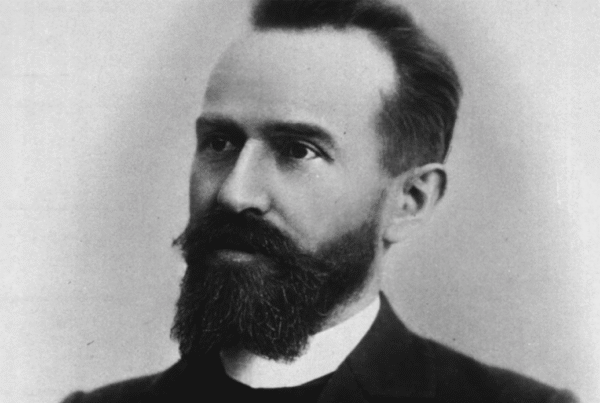
The Poker Event (Edmonds and Eidinow 2001, Karl Popper 1999) between Professor Karl Popper and Professor Ludwig Wittgenstein, lends great support to the view that the two men may have some hidden agender in their harsh attacks on Freud and Psychoanalysis.
Perhaps as a result of the intellectual rivalry, if there was one, Popper was not an admirer of Wittgenstein as Wittgenstein colleagues at the University of Cambridge were at the time of the Poker Event. Popper did not believe that Wittgenstein was a great philosopher. He admitted gleefully, though perhaps jovially, that he had gone to deliver his lecture at the Moral Science Club at the University of Cambridge with the intention to provoke and challenge Wittgenstein to defend the view that there are no genuine philosophical problems (Popper 1999, P123).
Although the two Austrian intellectuals may wave or throw pokers at each other, they were surprisingly united, without collaboration, in their hostility towards Freud and psychoanalysis. They exhibited a distinct lack of knowledge and understanding of psychoanalysis, its neurological significance and global impact on medicine at the time. Their hostility may, perhaps, stem from an assumed rivalry with Freud and personal grudge against Freud on account of their resentment of his international fame and popularity. Freud, Popper, and Wittgenstein, all of Jewish ancestry, came from Austria.
However, while Freud enjoyed a hard fought professional and intellectual successes internationally and he is known in other areas of academic studies, Popper and Wittgenstein enjoyed their great intellectual and professional successes mainly in Philosophy. Popper is also known in some other areas of academic studies outside Philosophy such as in Sociology, Social Science, and Political Science. Wittgenstein studied Engineering but, he is known chiefly in Philosophy.
Now, as I introduce two further Austrians with Jewish ancestry, one can take a closer look at the suppositional rivalry and personal grudge that I am referring to here. First, there is Moritz Schlick, logical positivist and founder of the defunct, Vienna Circle. Secondly, Frederick Waismann of Open Texture fame, expert on Philosophy of Language, an Oxford and Cambridge man by employment. If one allows, for the purpose of illustration, that Freud, Popper, Schlick, Waisman, and Wittgenstein, the men from Austria, were engaged in a race, an intellectual race to achieve success internationally, one would be able to see the nastiness of the suppositional rivalry and personal grudge that I am referring to here.
If the race did, really, exist between the men from Austria, the nastiness of the race can be gleaned from the activities between the men in the following events such as the Poker event of 1946 mentioned above, Wittgenstein kicking Waismann out of the race by undermining his intellectual output, Popper undermining the work of Schlick and the Logical Positivists by his critical attacks. Popper (1999, P88) boasted that he killed off logical positivism. However, it is generally known that when Schlick’s former student, Hans Johan Nelbok murdered Schlick publicly at the steps of the university of Vienna in 1936, the Logical Positivists disbanded with the death of Schlick.
Popper’s view of Psychoanalysis (Popper 1972, PP34-36) is based on his conversation with Alfred Adler in 1919 when Popper was a 17 years old student. He was not a student of psychoanalysis. He did not understand Adler’s nomothetic explanation of clinical analysis. Thus, he says that Psychoanalysis is unfalsifiable. His followers sing the mantra of psychoanalysis and falsificationism verbatim with Popper. Wittgenstein’s views on Freud and Psychoanalysis as shown in his conversations with his former student (Wittgenstein, 1966) shows that he has a lot to learn about psychoanalysis.
However, neither Popper, Wittgenstein, nor any of the Austrian intellectuals who lashed on falsificationism on the model of the defunct Vienna Circle at the formative years of Psychoanalysis showed evidence of awareness of Freud’s view of falsificationism and psychoanalysis (Freud 1923a SE18 PP253-254) on the model of clinical science.
Certainly, Freud’s earlier intention for psychoanalysis which was preserved for posterity by Princess Marie Bonaprte (Maurice-Nneke, 2003), Psychology for the Neurologist (1895), published posthumously as A Project for a Scientific Psychology (1950, SE1) is not mentioned by the two men or any of the falsificationists of the Vienna Circle. Although Popper’s Hungarian colleague at the LSE, Professor Imre Lakatos, shows himself as a sophisticated methodological falsificationist as opposed to the naive methodological falsificationist (Lakatos 1978) which he ascribes to Popper, he was not among the logical positivists of the Viena circle.
The Psychodynamics of the Poker Event
A brief psychodynamics analysis of the Poker scene is necessary to understand the psychodynamics significance of the poker event. A discussion of any nature has psychodynamics content when the central content of the topic of discussion reveals the transformational process of conflict in its ideational content, in the events or situations of the discussion which lead to repression and, thus, to the ideational or intentional content becoming unconscious. In a discussion with psychodynamics content, the central content is in opposition to the dominant trend of the individual’s mental life so that it provokes the individual into a defence. This involves the interplay of forces whereby the intentions of the individual come into consideration. These intentions may be conscious or unconscious.
One needs to manifest the Poker scene in a Creative Visualisation (Maurice-Nneke 2025) in order to understand it psychically. In the constancy of psychodynamics forces, of the dynamic interaction within conscious and unconscious states and patterns of activities in the Id, the Ego, the Super Ego and the neural networks, the individual has a glimpse of the genesis of unconscious ideation within the psychodynamics of life. This enables an understanding of unexpected events and bizarre events in general.
The Poker event was an unexpected event and may be described as a bizarre action in respect of a meeting of the Moral Science Club. In the event, the suddenness of the nature of the Poker scene is part of the bizarreness of human behaviour. In this scene, there is Professor Wittgenstein with poker in hand, seething with rage. Professor Popper, icy cool with mean intentions to irk Professor Wittgenstein further by asking provoking questions. Lord Bertrand Russell in the corner quaking with fear. Students and distinguished members of the Moral Science Club cowered in terror and frightened for their lives as a poker was being waved about or thrown. Was that a philosophical gathering or visions of terror in a hostage situation? Was the poker event a reported dream experience of a member of the Moral Science Club?
It is clear that the psychodynamics of the Poker Scene is conflictive as it is an infringement of the expected morality and normality of a meeting of the Moral Science Club. Professor Wittgenstein was, perhaps, fixated to the uncontrollable, highly energized primordial impulses of the id which were laden with fury, ire, and angst. These conflict with the morality and normality of the occasion. However, they needed spontaneous expression on the spur of the moment. The storming of the room conflicts with the ideals of the club but enabled the control of the rage as a spontaneous act. Here the moral work of the Super Ego prevailed to prevent the situation sinking into carnage with poker attack.
REFERENCES
Edmonds, David and Eidinow, John 2001: Wittgenstien’s Poker. Faber and Faber
Freud, Sigmund 1923a: Two Encyclopaedia Articles, SE18 PP253-254
Freud, Sigmund 1950: A Project of Scientific Psychology SE1
Lakatos, Imre 1978: The methodology of scientific research programmes. Volume 1, CUP
Maurice-Nneke, Antony 2025: Mind Castles. Amazon Books
Maurice-Nneke, Antony 2003: The Psychodynamics of the Unconscious. Intapsy Pubs.
Popper, Sir Karl 1999: Unended Quest. An Intellectual Autobiography. Routledge
Popper, Sir Karl 1972: Conjectures and Refutations. The Growth of Scientific Knowledge. Routledge and Kegan Paul
Wittgenstein, Ludwig 1966: Lectures and Conversations, Edited by Cyril Barrett. Basil Blackwell, Oxford.